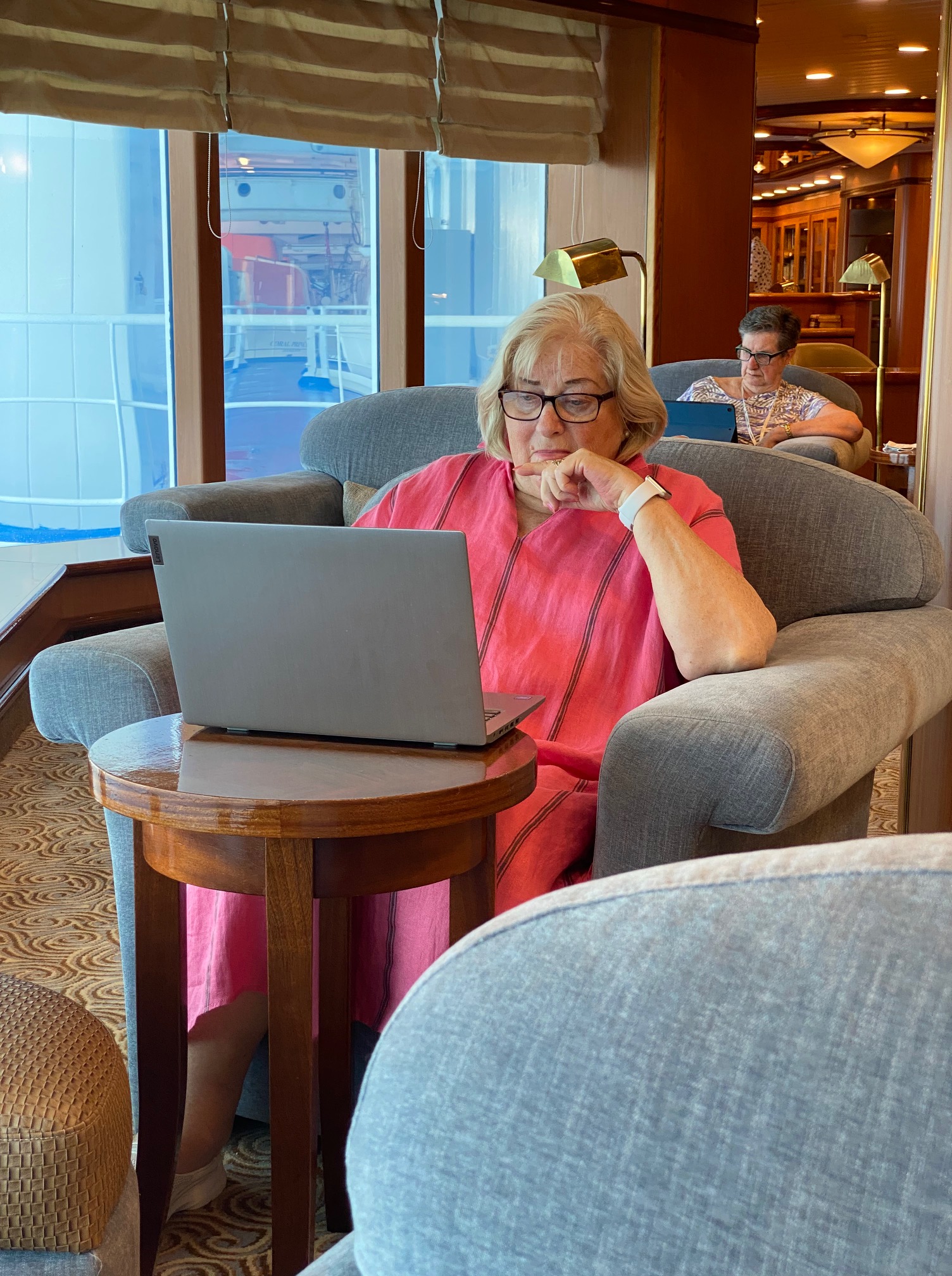
Sitting in the on-board library, I’m watching the warm blue sea slip by like creamy blue Curaçao as we navigate across the top of the Gulf of Carpentaria. We’re on our fourth day at sea. But to start at the beginning…
Earlier this year, we made a plan to travel and went to Lombok. We’d got the bug again, so decided a cruise later in the year would also be possible. Scanning the internet for something suitable, we eventually found an Australian circumnavigation cruise going from Brisbane back to Brisbane. Ideal. No flying anywhere, easy peasy. Not.
Turns out they were booked out, so we put our names on a wait list and, well, waited. In the meantime, we searched for other cruises near to home. Zilch with availability. It was then we realised that everyone and his dog had the same idea. Now relatively free from the Covid virus, and with most people fully vaccinated, cruise ships were coming out of mothballs.
Dismissing travel agents to whom we’d given instructions to find us a cabin, we gave up trying as the sailing date approached. Every now and then I checked the cruise line’s website until, Eureka! One cabin was freed up. Not exactly where we wanted it, but beggars can’t be choosers, and so now here we are, starboard, anticlockwise sailing around Australia.
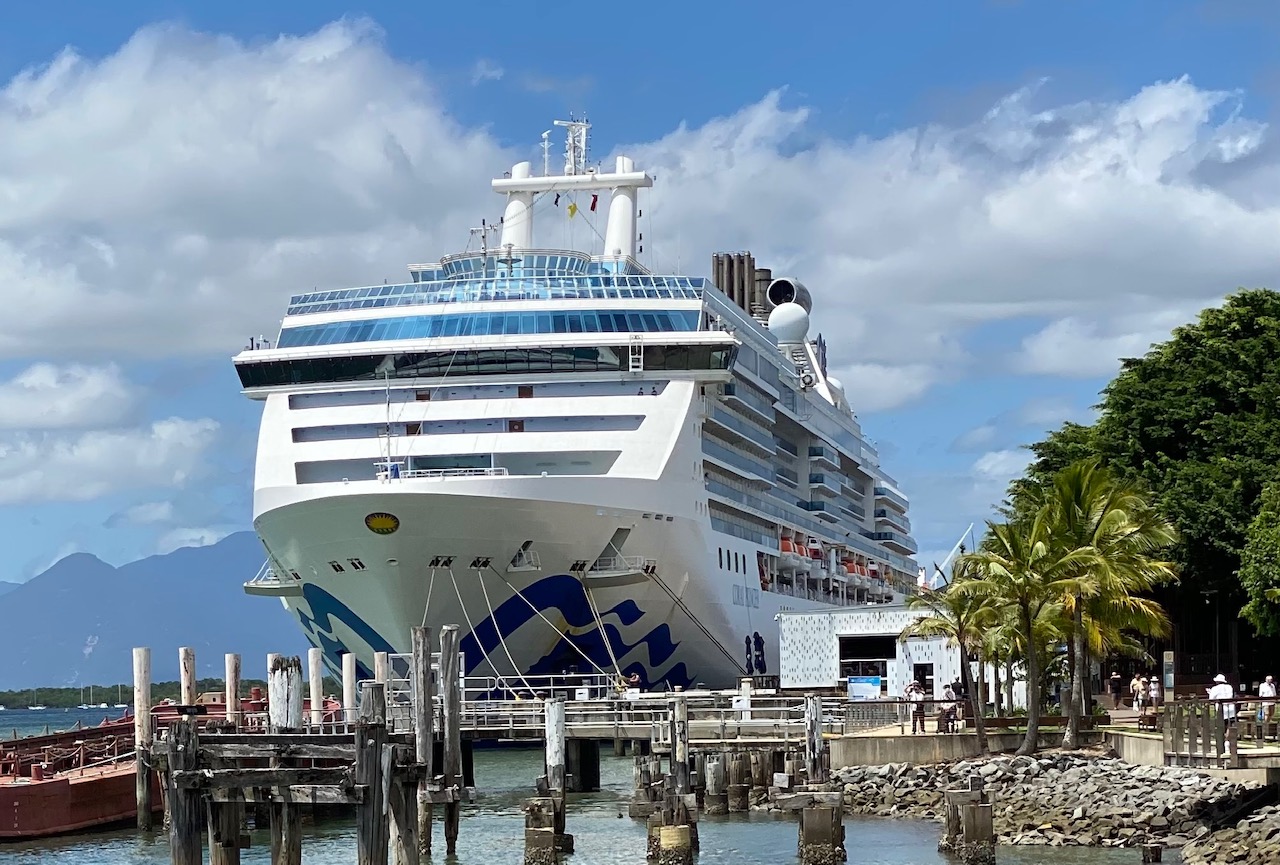
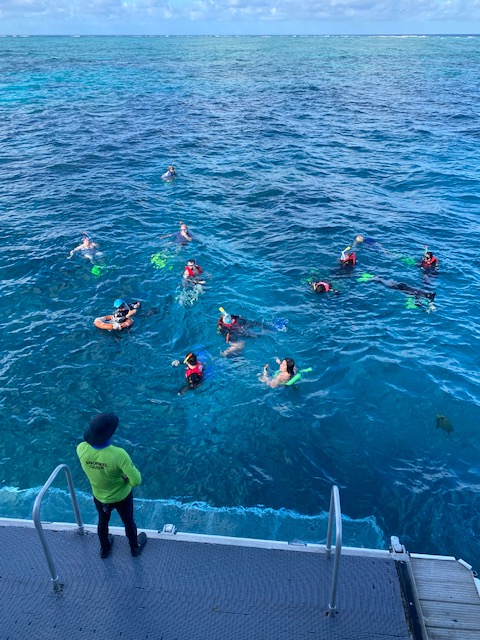
We have been to many of the places we’re to visit, and others that have been on our bucket list that we’d most likely never get to any other way. In Cairns, our first port of call, Peter opted to go to the outer Barrier Reef on a speedboat snorkelling expedition while I pampered myself in the onboard spa and caught up with some much-needed sleep, for only days before, I was in hospital having surgery, before rather than after the trip – just in case.
Returning to the ship, Peter, having enjoyed his awayday, then recalled what they found on the reef. He and other fellow-snorkellers were shocked and saddened by the lack of fish, coral, and all things that used to grow there. Instead, they found bleached and dead coral, much of it colourless and seemingly dead, like lifeless rock, confirming what we’d all been told: that the Great Barrier Reef is in grave danger of dying off. Brittany, the marine biologist on board their vessel, explained that there are areas that are re-generating, getting used to and trying against all odds to grow back in globally warming and polluted waters, but they are not allowed to take tourists there right now. Some people, like Peter, had been there years ago when the reef was teeming with tropical fish and colourful corals, and tried to remember with sadness and tears in their eyes whilst being very aware of what and who was responsible for this potential loss of a World Heritage icon.
Yet onwards we travel – up and past the pointy end of Queensland, the York Peninsular. And up and up it went. This is a long leg – next port, Darwin. So, lots of sea days to do what we prefer – reading, writing and cocktailing. Life on board is OK. We have a nice big cabin with two TVs that can tune in to BBC World News, ABC, Sky Australia and a myriad of other channels. This fairly old ship, the Coral Princess, needs some TLC, but the recent updating has introduced amazing on-board technology that streamlines everything from ordering drinks and food ‘at home’, finding each other’s location on the ship, opening the cabin door as we approach, and checking what’s on and where. If you want to shop at the onboard shops, just present it at the counter where it’s scanned and the bill goes on your account. Magic! It’s called a ‘Medallion’ and you wear it on a lanyard, or on your wrist, or simply put it in your bag or pocket. We had read about the technology before we boarded, but I was sceptical that it worked as well as it does, after reading user’s reviews. The internet works so well here too, unlike other ships’ systems we’ve used. It just makes everything easier.
But onwards towards Darwin. We’ve never been to Darwin and we’re looking forward to seeing the sights and learning more, especially the time in 1942 when the place was flattened by Japanese bombs. The only strike on Australian soil during the war. Peter’s father was then serving in the Royal Australian Air Force, clearing jungles, building runways and wading through swamps in the Trobriand Islands. When he came back home from war to Melbourne in 1945, it was the first time he’d set eyes on his only son, Peter.
The sea today is millpond-smooth, with the occasional shoal of flying fish breaking the surface, making their way determinedly to somewhere else. We’ve left the small islands behind, as we round the west end of the gulf, turning south west to make it into port by the morning. The forecast is for rain, but then this is the season in this remote part of Australia they call ‘The Wet’. Out with our umbrellas, I think…